
Watch Water Resistance Explained: More Than Just Waterproofing – A Test of Structure and Craftsmanship
In the modern world of watches, “water resistance” is not only a practical requirement but also a significant indicator of watchmaking craftsmanship. Many consumers may wonder: Can a watch marked “Water Resistant 30m” actually be used for diving at 30 meters? This article will provide an in-depth analysis of the principles behind watch water resistance, testing standards, and considerations for daily use.

The Principles of Water Resistance: The Devil is in the Details
The water resistance of a watch primarily relies on several key structural elements:
- Gaskets/Seals: Typically made of rubber, silicone, or Teflon, located between the crown, case, and crystal.
- Screw-down Crown: Uses a threaded design to convert external pressure into greater sealing force.
- Monobloc Case Construction: Minimizes seams to reduce the risk of water ingress.
- Helium Escape Valve (for professional dive watches): Used to equalize pressure differences during deep dives.
Decoding Water Resistance Ratings: The Truth Behind the Numbers
Watch water resistance is often indicated in “ATM,” “meters,” or “bar,” but these numbers can frequently be misleading:
|
Rating |
Static Pressure |
Suitable Real-World Activities |
Important Notes |
|
3 ATM / 30m |
Pressure equivalent to 30m depth |
Daily water resistance, hand washing, rain |
Not suitable for swimming, bathing |
|
5 ATM / 50m |
Pressure equivalent to 50m depth |
Swimming, shallow water activities |
Not suitable for diving, hot showers |
|
10 ATM / 100m |
Pressure equivalent to 100m depth |
Snorkeling, water sports |
Suitable for pool swimming |
|
20 ATM / 200m |
Pressure equivalent to 200m depth |
Professional water activities, diving |
Suitable for most recreational diving |
|
30 ATM+ / 300m+ |
Pressure equivalent to 300m+ depth |
Technical diving, professional use |
Usually equipped with a helium escape valve |
Important Reminder: The “meter” rating refers to laboratory testing under static pressure. In real-world use, the dynamic pressure generated by arm movements can far exceed the static test value.
Water Resistance Testing: Rigorous Quality Control
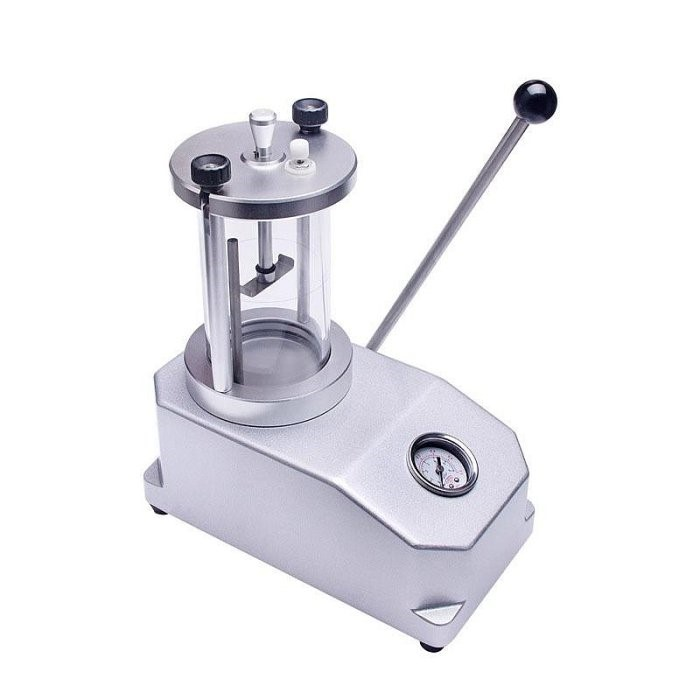
Watches undergo a series of strict tests before leaving the factory:
- Dry Test: The watch is placed in a vacuum chamber to detect pressure changes caused by leaks.
- Wet Test: The watch is pressurized and then immersed in water to observe if any bubbles escape.
- Condensation Test: The watch is heated and then cooled to check for condensation inside the crystal.
- Pressure Cycle Test: Simulates pressure changes during actual use to verify long-term reliability.
The International Organization for Standardization (ISO) has established specific standards for dive watches (ISO 6425), requiring them to pass:
- Pressure testing at 125% of the rated depth
- Thermal shock testing (40°C temperature difference)
- Comprehensive tests for resistance to saltwater, magnetic fields, etc.
Daily Use and Maintenance Guide
Even a watch with excellent water resistance requires proper use and care:
Usage Don’ts:
- Avoid using in hot baths, saunas (thermal expansion and contraction can damage seals)
- Avoid operating the crown or buttons underwater
- Avoid contact with chemical solvents and cosmetics
- Rinse thoroughly with fresh water after use in seawater
Regular Maintenance:
- Have water resistance checked every 1-2 years
- Replace seals every 3-5 years (rubber materials naturally degrade)
- Water resistance must be rechecked after any impact or repair
Conclusion: Water Resistance is a Systems Engineering Feat
The water resistance of a watch is not a single feature but a comprehensive reflection of case design, materials science, manufacturing precision, and testing standards. When choosing a watch, one should base the decision on actual needs rather than simply pursuing a high numerical rating, and understand that “water-resistant” does not mean “resistant to all water.” Correct usage practices and regular maintenance are essential to ensure that a cherished timepiece continues to run accurately through the passage of time.
Whether it’s a simple model for daily wear or a professional dive watch, its water resistance embodies the watchmaker’s dedication to detail—constructing a micro-fortress within a tiny space that withstands the external environment. This is the perfect fusion of mechanical craftsmanship and modern technology.

 English
  French
  German
  Italian